Trading
Trading has become one of the most discussed financial activities in the modern world. With the rise of online platforms and mobile applications, more people than ever are participating in financial markets. From stocks and currencies to cryptocurrencies and commodities, trading offers opportunities for profit—but it also carries significant risk.
For beginners, trading may appear complex or intimidating. Charts, numbers, market trends, and financial terminology can feel overwhelming at first. However, at its core, trading is simply the act of buying and selling assets with the goal of making a profit.
This comprehensive guide explores what trading is, how it works, the types of trading available, strategies used by traders, risks involved, and how to approach trading responsibly.
What Is Trading?
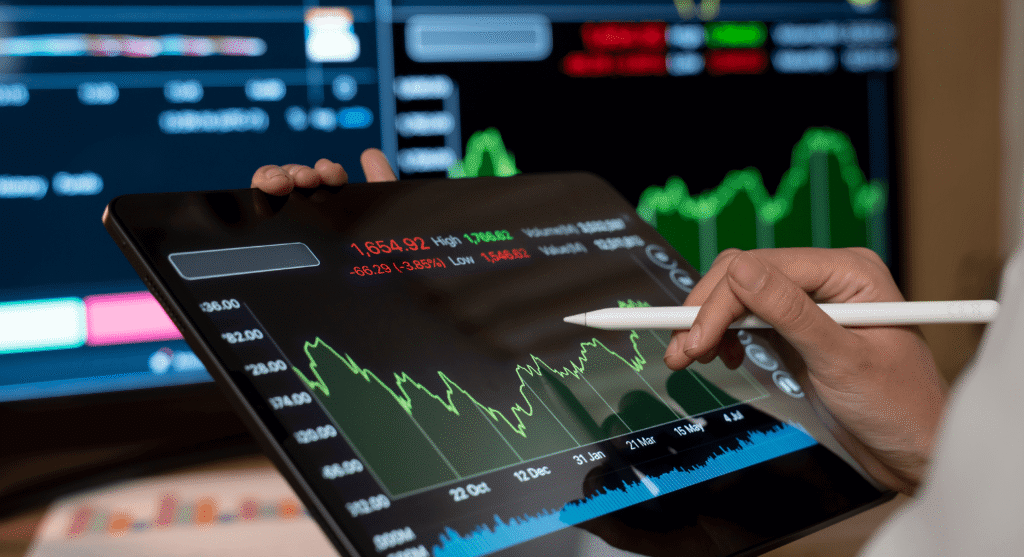
Trading is the process of buying and selling financial instruments in various markets. Traders aim to profit from price movements by purchasing an asset at a lower price and selling it at a higher price—or, in some cases, profiting when prices fall.
Unlike long-term investing, which focuses on holding assets for years, trading typically involves shorter time frames. Some trades last minutes, hours, or days, depending on the trader’s strategy.
Financial markets exist to facilitate these transactions, connecting buyers and sellers worldwide.
How Trading Works
The basic concept of trading is straightforward:
- A trader selects a financial asset.
- The trader predicts whether the price will rise or fall.
- The trader executes a buy or sell order.
- If the market moves in the predicted direction, the trader may earn a profit.
- If the market moves against the prediction, the trader may incur a loss.
Prices in financial markets change constantly due to supply and demand. When more people want to buy an asset, its price tends to rise. When more people want to sell, the price tends to fall.
Modern trading is primarily done through online brokerage platforms, which provide access to global markets in real time.
Major Financial Markets
Trading occurs in several major financial markets, each offering different opportunities and risks.
1. Stock Market
The stock market allows individuals to buy and sell shares of publicly traded companies. When you purchase a stock, you own a small portion of that company.
Stock prices fluctuate based on company performance, economic conditions, investor sentiment, and global events.
2. Forex Market
The foreign exchange (forex) market involves trading currency pairs, such as EUR/USD or GBP/JPY. Traders aim to profit from changes in exchange rates.
Forex is one of the largest and most liquid markets in the world, operating 24 hours a day during weekdays.
3. Commodity Market
Commodities include physical goods such as gold, oil, natural gas, and agricultural products. Commodity prices are influenced by global supply, demand, weather conditions, and geopolitical events.
4. Cryptocurrency Market
Cryptocurrencies are digital assets that operate on blockchain technology. Prices can be highly volatile, offering both significant opportunities and substantial risk.
Types of Trading
Different traders use different approaches based on their goals, time availability, and risk tolerance.
Day Trading
Day traders open and close positions within the same day. They aim to profit from small price movements and avoid overnight risk.
Day trading requires intense focus, quick decision-making, and strong discipline.
Swing Trading
Swing traders hold positions for several days or weeks. They aim to capture medium-term price trends.
This approach requires patience and analysis of market patterns.
Position Trading
Position traders hold trades for months or even years. This strategy combines trading and long-term investing principles.
Scalping
Scalping involves making dozens or even hundreds of trades in a single day to capture small price changes.
It is a fast-paced strategy that demands strong concentration and execution speed.
Key Concepts in Trading
Understanding fundamental trading concepts is essential before entering the markets.
Volatility
Volatility refers to how much an asset’s price moves over time. High volatility means larger price swings, which can create both opportunities and risks.
Liquidity
Liquidity measures how easily an asset can be bought or sold without significantly affecting its price.
Leverage
Leverage allows traders to control larger positions with a smaller amount of capital. While it can amplify profits, it also increases losses.
Risk Management
Risk management involves strategies to limit potential losses, such as setting stop-loss orders and diversifying trades.
Trading Strategies
Successful trading is not based on luck. It requires planning, discipline, and a clear strategy.
Technical Analysis
Technical analysis involves studying price charts, patterns, and indicators to predict future movements.
Traders analyze trends, support and resistance levels, and trading volume to make decisions.
Fundamental Analysis
Fundamental analysis evaluates economic data, company performance, interest rates, and global events to determine an asset’s value.
Trend Following
Trend-following strategies aim to profit by identifying and trading in the direction of the market trend.
Breakout Trading
Breakout traders look for assets moving beyond key price levels, expecting strong momentum.
The Psychology of Trading
Trading is not just about numbers—it is also about emotions. Fear, greed, impatience, and overconfidence can influence decisions.
Common psychological challenges include:
- Fear of missing out (FOMO)
- Panic selling
- Overtrading
- Revenge trading after losses
Maintaining emotional discipline is critical. Many experienced traders focus on consistency rather than chasing quick profits.
Risks Involved in Trading
While trading offers profit potential, it carries significant risk.
Market Risk
Prices can move unexpectedly due to news or economic changes.
Leverage Risk
Using leverage can magnify losses quickly.
Emotional Risk
Emotional decision-making often leads to poor outcomes.
Lack of Knowledge
Entering markets without understanding basic principles increases the likelihood of losses.
Trading should always be approached with caution and realistic expectations.
Importance of Education and Practice
Before risking real money, beginners should invest time in learning.
Ways to build knowledge include:
- Reading educational resources
- Practicing with demo accounts
- Studying market trends
- Learning risk management techniques
Continuous learning is essential, as markets constantly evolve.
Risk Management Techniques
Managing risk is more important than maximizing profit.
Set Stop-Loss Orders
A stop-loss automatically closes a trade if the price reaches a predetermined level.
Use Proper Position Sizing
Never risk a large percentage of your capital on a single trade.
Diversify
Avoid putting all funds into one asset or market.
Maintain a Trading Plan
A written trading plan helps prevent impulsive decisions.
Trading vs. Investing
While trading and investing both involve financial markets, they differ in time horizon and strategy.
- Trading focuses on short-term price movements.
- Investing focuses on long-term growth and wealth building.
Some individuals combine both approaches depending on their financial goals.
Technology and Modern Trading
Technology has transformed trading dramatically. Online platforms provide:
- Real-time price data
- Advanced charting tools
- Automated trading systems
- Mobile trading access
Algorithmic trading and artificial intelligence are increasingly influencing financial markets.
However, technology also increases competition and market speed, requiring traders to adapt quickly.
Building a Responsible Trading Approach
Trading should never be seen as a guaranteed path to wealth. Responsible traders:
- Start with small capital
- Avoid emotional decisions
- Accept losses as part of the process
- Focus on long-term consistency
Patience and discipline often matter more than rapid gains.
Common Mistakes Beginners Make
New traders often encounter similar challenges:
- Trading without a strategy
- Ignoring risk management
- Following market hype blindly
- Overusing leverage
- Expecting instant success
Recognizing and avoiding these mistakes improves long-term outcomes.
Is Trading Right for You?
Trading requires:
- Time commitment
- Emotional control
- Continuous learning
- Financial discipline
It may not suit everyone. Individuals should assess their financial goals, risk tolerance, and lifestyle before entering markets.
Final Thoughts
Trading is a dynamic and challenging activity that offers opportunities for profit while carrying substantial risk. It requires knowledge, strategy, discipline, and emotional resilience.
For those willing to learn and practice responsibly, trading can become a valuable financial skill. However, success rarely happens overnight. Consistency, patience, and risk management form the foundation of sustainable trading.
In the end, trading is not just about buying and selling—it is about understanding markets, managing emotions, and making informed decisions. With the right mindset and preparation, it can be an educational and potentially rewarding journey in the world of finance.